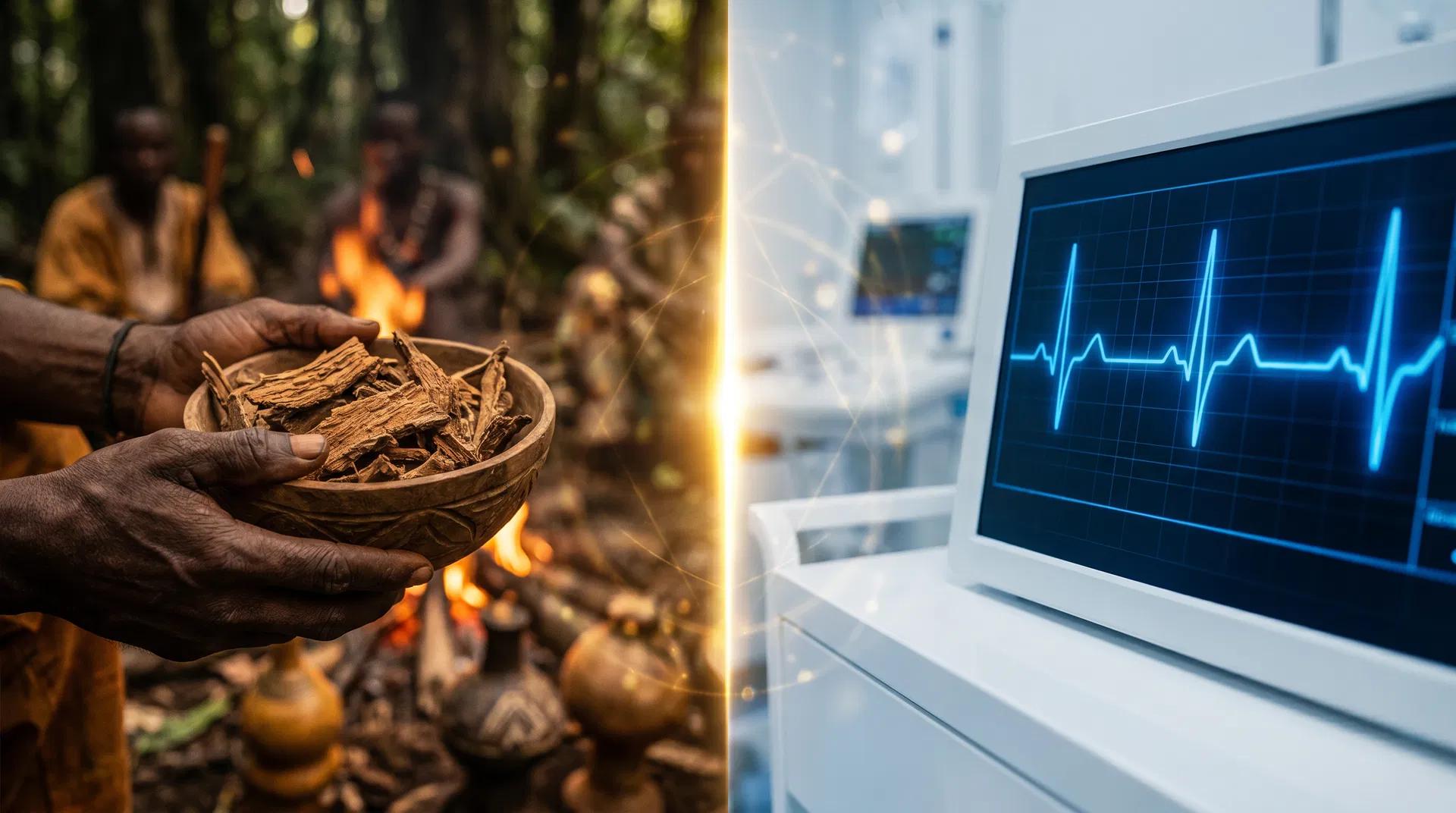
Iboga vs Ibogaine
Twelve companion alkaloids in sacred synergy — or one purified molecule under cardiac monitoring. The Bwiti have known for centuries what Western medicine is only now beginning to measure.
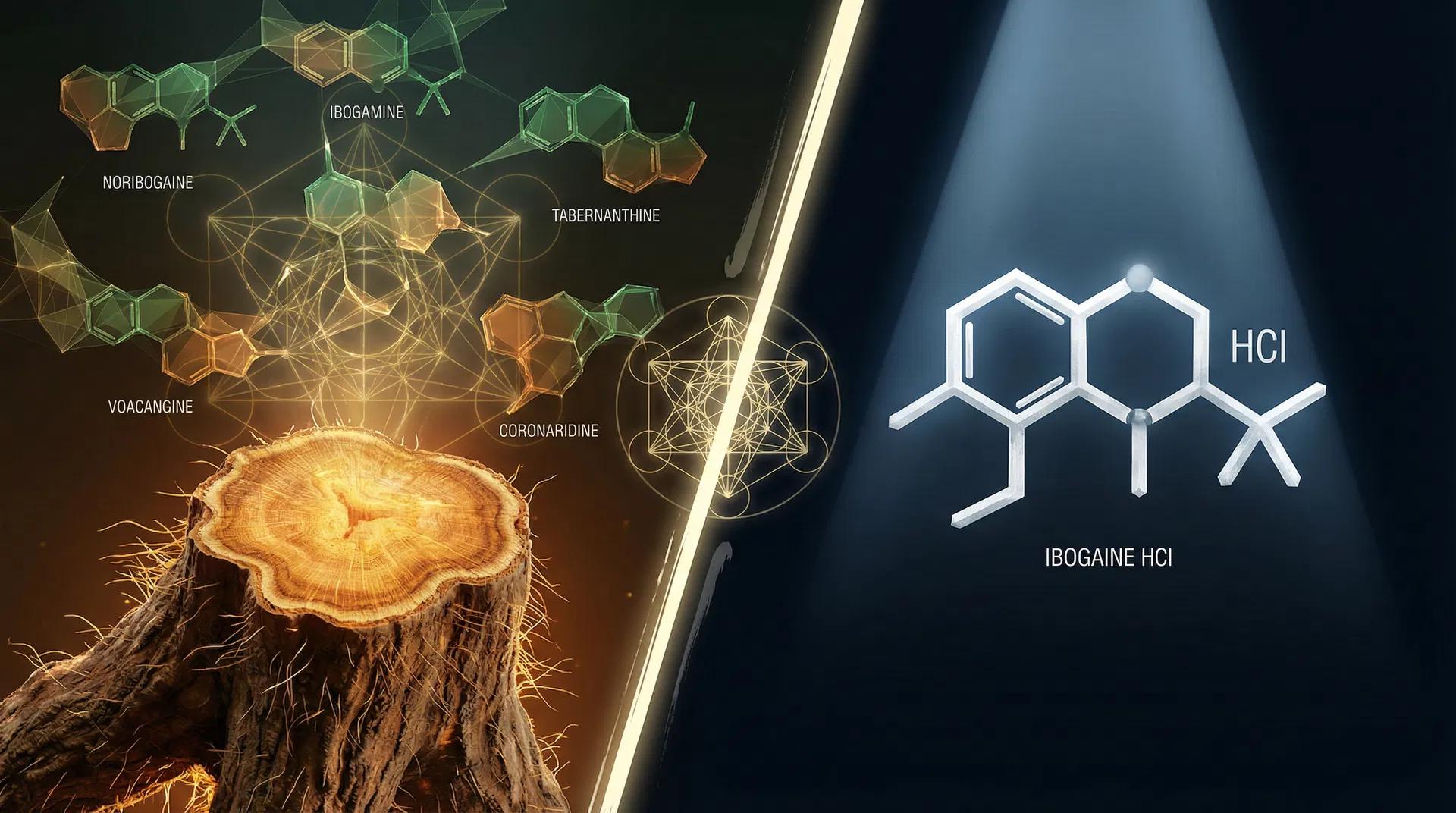
The Entourage Effect
Tabernanthe iboga root bark contains at least twelve identified indole alkaloids — approximately 6% of the dried bark by weight. Ibogaine is the most abundant (50–80% of total alkaloid content), but the companion alkaloids — ibogamine, tabernanthine, voacangine, coronaridine, ibogaline, and noribogaine — each contribute distinct pharmacological actions. Traditional Bwiti practitioners have always insisted the whole root bark is greater than any single compound. Western pharmacology is beginning to agree.
Entourage Hypothesis
Like cannabis (THC + CBD + terpenes) and ayahuasca (DMT + harmalines), iboga's full alkaloid profile may produce synergistic effects that isolated ibogaine cannot replicate. Coronaridine alone shows independent anti-addictive properties at NIDA. Tabernanthine provides the stimulant phase. Voacangine contributes anti-inflammatory action.
| Alkaloid | Abundance | Primary Action | Unique Property | Present In |
|---|---|---|---|---|
| Ibogaine | ~50–80% of total alkaloid content | NMDA antagonist + KOR agonist + SERT/DAT inhibitor | Primary anti-addictive compound; metabolized to noribogaine | Both |
| Noribogaine (12-OH-ibogamine) | ~5% in bark; primary metabolite of ibogaine | μ-Opioid agonist + SERT inhibitor (stronger than ibogaine) | Half-life 24–48h vs 4–7h for ibogaine; sustained afterglow | Both (natural + metabolite) |
| Ibogamine | ~5–15% | Weak CNS stimulant, structural analog of ibogaine | May modulate ibogaine's intensity; less studied independently | Whole plant only |
| Tabernanthine | ~5–10% | CNS stimulant, adrenergic activity | Contributes to the stimulant phase of iboga experience | Whole plant only |
| Voacangine | ~2–5% | Anti-inflammatory, analgesic | Precursor to ibogaine in biosynthesis; independent therapeutic potential | Whole plant only |
| Coronaridine | ~1–3% | α3β4 nicotinic antagonist | Independent anti-addictive properties studied at NIDA | Whole plant only |
| Ibogaline | Trace | Serotonergic modulation | Contributes to entourage serotonin effects | Whole plant only |

Multi-Target Mechanism
Ibogaine is pharmacologically unique among psychedelics — it simultaneously engages opioid, glutamate, serotonin, dopamine, and nicotinic systems. No other known compound hits this many addiction-relevant targets in a single dose. Its primary metabolite, noribogaine, extends the therapeutic window to 24–48 hours with stronger mu-opioid and serotonin transporter affinity than the parent compound.
| Receptor | Action | Clinical Relevance | Ki (Ibogaine) |
|---|---|---|---|
| NMDA (glutamate) | Non-competitive antagonist | Addiction interruption, neuroplasticity, neuroprotection | ~3.1 μM |
| κ-Opioid (KOR) | Agonist | Anti-addictive effects, dysphoria modulation | ~2–4 μM |
| μ-Opioid (MOR) | Weak agonist (noribogaine stronger) | Opioid withdrawal attenuation | ~10 μM |
| σ-2 | Agonist | Neuroprotection, anti-addictive signaling | — |
| SERT (serotonin transporter) | Inhibitor | Antidepressant, mood elevation | ~2 μM |
| DAT (dopamine transporter) | Inhibitor | Reward circuit reset, motivation | ~2 μM |
| 5-HT2A | Partial agonist | Psychedelic/visionary experience | ~10 μM |
| nACh (nicotinic) | Antagonist | Smoking cessation potential | — |
| GDNF / BDNF | Upregulation (indirect) | Long-term neuroplasticity, dopamine neuron repair | — |
Noribogaine: The Hidden Duration
Ibogaine's half-life is 4–7 hours. But its metabolite noribogaine persists for 24–48 hours with stronger mu-opioid and SERT binding. This is why opioid withdrawal relief extends far beyond ibogaine's direct action — and why cardiac monitoring must continue for at least 72 hours post-treatment.

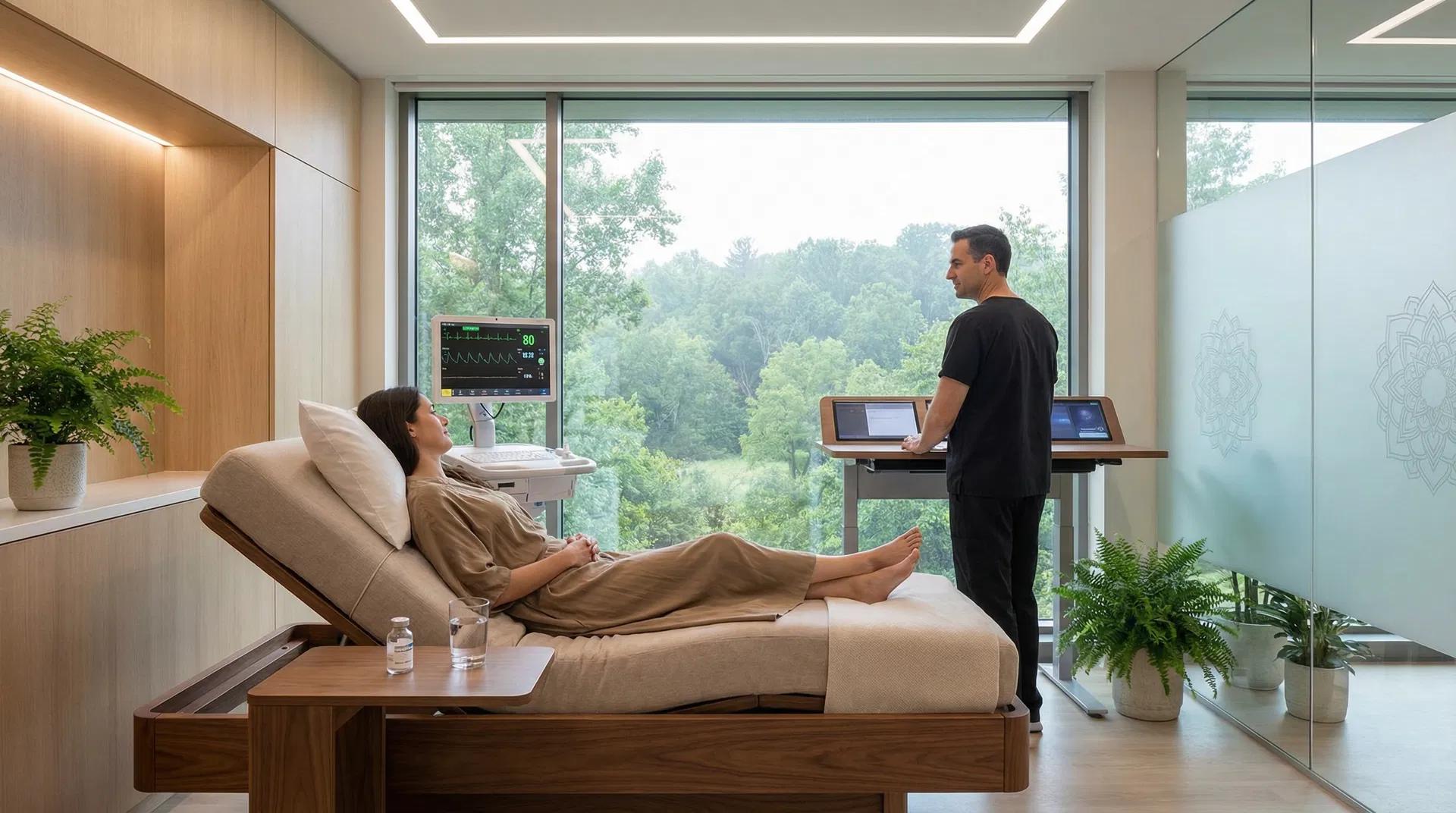
Sacred Bark vs Clinical Isolate
The Bwiti tradition and Western ibogaine clinics approach the same plant from opposite ends of the epistemological spectrum. One treats the root bark as a living intelligence — a teacher plant that communicates through visions, purging, and ancestor contact. The other isolates the most pharmacologically active molecule and administers it under EKG monitoring. Both save lives. Neither is wrong.
| Dimension | Iboga (Whole Plant) | Ibogaine (HCl Isolate) |
|---|---|---|
| Source | Raw root bark of Tabernanthe iboga | Purified alkaloid extracted from root bark (HCl salt) |
| Alkaloid profile | 12+ alkaloids in full-spectrum synergy | Single isolated compound |
| Duration | 24–72 hours (variable) | 18–36 hours (more predictable) |
| Dosing precision | Variable — bark potency differs by harvest, age, region | Exact mg/kg dosing possible |
| Visionary intensity | Extremely intense — full Bwiti initiation can last 3 days | Intense but more contained; fewer hallucinations reported |
| Traditional context | Bwiti religion (Gabon/Cameroon) — initiation, healing, ancestor communion | Clinical addiction treatment — Mexico, Brazil, New Zealand, South Africa |
| Primary application | Spiritual development, community healing, rites of passage | Opioid/stimulant addiction interruption, PTSD, TBI, depression |
| Cardiac risk | Present — compounded by variable dosing and companion alkaloids | Present — QT prolongation; mitigated by cardiac screening + monitoring |
| Regulatory status | Legal/unregulated in Gabon, Cameroon; Schedule I in US | Unscheduled in Mexico, Brazil; prescription in NZ, AU; Schedule I in US |
| Entourage effect | Yes — companion alkaloids modulate, buffer, and extend the experience | No — single compound; predictable but potentially less nuanced |
| Metabolite profile | Noribogaine + metabolites of all companion alkaloids | Noribogaine (12-hydroxyibogamine) — sustained 24–48h half-life |
| Cost | $500–2,000 (ceremony, traditional setting) | $5,000–12,000 (clinical treatment with medical monitoring) |
What the Data Shows
Most clinical data is on ibogaine HCl, not whole iboga — because clinical trials require standardized dosing. The Bwiti tradition has thousands of years of observational evidence but limited Western-style controlled studies. What exists is compelling: single-dose ibogaine eliminates opioid withdrawal in 80–90% of cases and sustains craving reduction at 12 months in over half of participants.
| Condition | Improvement | Source |
|---|---|---|
| Opioid addiction (withdrawal elimination) | 80–90% | Mash et al., Ann NY Acad Sci 2000 |
| Opioid craving reduction (sustained 12mo) | 50–60% | Noller et al., Am J Drug Alcohol Abuse 2018 |
| Cocaine dependence | 60–70% | Schenberg et al., J Psychopharmacol 2014 |
| Alcohol use disorder | 50–65% | Brown & Alper, Curr Drug Abuse Rev 2018 |
| PTSD symptom reduction | 65–80% | Davis et al., Psychopharmacology 2017 |
| Treatment-resistant depression | 50–70% | Noller et al., 2018; case series |
| Traumatic brain injury (TBI) | Significant improvement | MAPS-sponsored case studies; Stanford 2024 trial |
Limitations
Most studies are observational, not randomized controlled trials. Sample sizes are small (n=12–88). Publication bias likely inflates success rates. Ibogaine is not FDA-approved. The Stanford TBI trial (2024) is the most rigorous to date. Whole-iboga outcomes data is almost entirely anecdotal from Bwiti practitioners.
What Iboga Replaces
Ibogaine's multi-receptor profile means it mechanistically overlaps with several pharmaceutical categories — opioid agonists, antagonists, NMDA modulators, SSRIs, and smoking cessation agents. A single ibogaine session can address what would otherwise require 3–5 separate prescriptions with their respective side-effect profiles.
| Pharmaceutical | Category | Iboga / Ibogaine Alternative | Supplement Bridge | Evidence |
|---|---|---|---|---|
| Methadone | Opioid agonist (MAT) | Ibogaine flood dose (single session) | NAC; Mag Glycinate; DLPA | Strong (Mash, Noller) |
| Buprenorphine (Suboxone) | Partial opioid agonist | Ibogaine (requires taper first) | Black Seed Oil; Ashwagandha; GABA | Strong |
| Naltrexone (Vivitrol) | Opioid antagonist | Ibogaine + noribogaine sustained effect | Kudzu; NAC; Milk Thistle | Strong |
| Disulfiram (Antabuse) | Alcohol deterrent | Ibogaine (alcohol); Iboga ceremony | Kudzu; NAC; Dihydromyricetin (DHM) | Moderate |
| Acamprosate (Campral) | NMDA modulator (alcohol) | Ibogaine (NMDA antagonist mechanism) | Taurine; Mag Threonate; L-Glutamine | Moderate |
| Varenicline (Chantix) | Smoking cessation | Ibogaine (nicotinic antagonist) | Lobeline; Cytisine; NAC | Emerging |
| Sertraline (Zoloft) | SSRI (depression) | Ibogaine (SERT inhibitor + neuroplasticity) | St. John's Wort; Saffron; Omega-3 | Moderate |
| Prazosin (PTSD nightmares) | Alpha blocker | Ibogaine (PTSD); Iboga ceremony | Phosphatidylserine; CBD; Lion's Mane | Emerging |
Preparation & Integration Stacks
Ibogaine preparation is more medically intensive than any other psychedelic. Cardiac support (CoQ10, magnesium, potassium) is non-negotiable. The 4–8 week pre-treatment window is critical for building physiological resilience. Post-integration extends longer than most medicines due to noribogaine's sustained 24–48 hour half-life.
PRE
4–8 weeks before (critical preparation window)
DAY-OF
Day of treatment (clinical protocol)
POST-INTEGRATION
4–12 weeks after (extended integration — noribogaine active 24–48h)
Readiness Requirements
Iboga and ibogaine demand the highest readiness thresholds of any medicine in the PRI. The 24–72 hour duration, cardiac risk profile, and intensity of the visionary experience mean that every dimension must be at or near maximum before proceeding.
| Icon | Dimension | Iboga Threshold | Ibogaine Threshold | Key Consideration |
|---|---|---|---|---|
| Mental | Very High | High | 24–72hr duration demands exceptional psychological stability; no active psychosis, bipolar, or schizophrenia | |
| Emotional | Very High | High | Life-review visions surface buried trauma; full emotional surrender required | |
| Physical | Critical | Critical | Mandatory cardiac screening (EKG + electrolytes); QT prolongation risk; liver function tests required | |
| Set & Setting | Critical (Ceremonial) | Critical (Clinical) | Iboga: Bwiti-trained facilitator non-negotiable. Ibogaine: medical supervision with cardiac monitoring | |
| Spiritual | Highest Alignment | High Alignment | Iboga is considered a sacrament in Bwiti — ancestor communion, death-rebirth initiation |
Where Iboga Fits
Ibogaine is the strongest evidence-based medicine for opioid addiction interruption. For depression, ketamine acts faster. For PTSD, MDMA has the strongest trial data. For spiritual development, iboga (whole plant) in Bwiti context is unmatched in depth and duration. Know what you need before choosing.
| Icon | Medicine | Addiction | Depression | PTSD | TBI | Duration | Beginner | Evidence |
|---|---|---|---|---|---|---|---|---|
| Iboga (Whole Plant) | Yes | Some | Yes | Some | 24–72h | No | Traditional | |
| Ibogaine HCl | Best | Yes | Yes | Yes | 18–36h | No | Moderate–Strong | |
| Psilocybin | Yes | Yes | Yes | Some | 4–6h | Yes | Strong | |
| MDMA | Some | Some | Best | Some | 4–6h | Yes | Strong | |
| Ketamine | Some | Fastest | Some | Some | 1–2h | Yes (clinical) | Strong/FDA | |
| Ayahuasca | Yes | Yes | Yes | — | 4–8h | No | Moderate | |
| Mescaline/Peyote | Yes | Yes | Yes | — | 8–12h | Moderate | Moderate |
I Sat Ibogaine at The Mission Within
I sat Ibogaine at The Mission Within in Baja California alongside Navy SEALs. Men trained to feel nothing wept. Men who had spent years cycling through VA medications, residential rehab, and every approved protocol the United States government offers — undone and rebuilt by a molecule in a single night.
That is not anecdote. That is an 88% PTSD symptom reduction at one month, published in Nature Medicine by Stanford University in January 2024. That is 80% of participants at The Mission Within no longer meeting diagnostic criteria for PTSD — across 1,200 veterans. That is the most significant psychiatric intervention data in a generation, happening 90 minutes south of the US border because the US government still classifies this plant as having “no accepted medical use.”
If you're here because you or someone you love is suffering and nothing has worked — you're in the right place. If you're here because you're curious about the most interesting molecule in neuropharmacology — also the right place.
This section will tell you what ibogaine actually is, what the research actually shows, which facilities are worth your life, and which ones you should run from. Then the Iboga Compass below will match you to the right path for your specific situation — or tell you clearly if ibogaine isn't right for you at all.
No paid placements. No ads. No bullshit.
Updated Research Data (2024–2026)
| Condition | Result | Source |
|---|---|---|
| Opioid withdrawal elimination | 80–90% | Mash et al., Ann NY Acad Sci 2000 |
| Opioid abstinence at 6 months (n=88) | 54% | Davis et al., J Psychedelic Studies 2017 |
| Opioid craving reduction at 12 months | 50–60% | Noller et al., Am J Drug Alcohol Abuse 2018 |
| Cocaine dependence | 60–70% | Schenberg et al., J Psychopharmacol 2014 |
| Alcohol use disorder | 50–65% | Brown & Alper 2018 |
| SOF veterans — PTSD reduction at 1 month | 88% | Cherian et al., Nature Medicine, Jan 2024 |
| SOF veterans — depression reduction at 1 month | 87% | Cherian et al., Nature Medicine 2024 |
| SOF veterans — anxiety reduction at 1 month | 81% | Cherian et al., Nature Medicine 2024 |
| SOF veterans no longer meeting PTSD criteria at 1 year | 71% | Williams et al., Nature Mental Health, July 2025 |
| Mission Within veterans — no longer meet PTSD criteria | 80% | missionwithin.org, verified June 2026 |
| Safety across 19,071 patients at 11 clinics | 6 deaths — all opioid-use-disorder; zero in non-SUD | Research Square multisite analysis, June 2026 |
Honest Limitations
Most studies are observational, not randomized controlled trials. Sample sizes are small. Ibogaine is not FDA-approved. The Research Square 2026 study — 19,071 patients — is the largest safety analysis to date. Six deaths, all in opioid-use-disorder patients at under-resourced settings. Zero in non-SUD patients under proper protocols. Proper protocols. That phrase is doing enormous work.
Who Should Not Do This
These are absolute contraindications. Not risk factors to manage. Hard stops. If any apply, ibogaine is not your path right now.
Cardiac — Non-Negotiable
- Long QT Syndrome or QTc above 450ms on any EKG. In a 14-patient Dutch clinical study, 50% reached QTc above 500ms during treatment. Every known ibogaine fatality has involved either an undetected cardiac condition or inadequate monitoring.
- Diagnosed heart disease, arrhythmia, Brugada syndrome, or history of cardiac events.
- Family history of sudden cardiac death under 50 or known inherited Long QT.
Any clinic that will take you without a 12-lead EKG reviewed by a physician is telling you something important about their standards.
Medical
- Severe liver disease or liver enzymes above 2.5× normal. Ibogaine is metabolized via CYP450-2D6. Compromised liver means dangerous accumulation.
- Uncontrolled seizure disorder. Ibogaine doesn't cause seizures. But seizures during treatment can trigger fatal arrhythmias.
- Pregnancy or breastfeeding.
Psychiatric
- Active psychosis. Acute bipolar mania. Schizophrenia or schizoaffective disorder (active). Ibogaine is an oneirogen — a waking dream lasting 8–20 hours. In a stable person this is transformative. In an actively psychotic person this is dangerous.
The Medications Problem
Most people reading this have more preparation work to do than they realize.
Hard stops — physician clearance required
- MAO inhibitors (MAOIs) — serious serotonin syndrome risk. Weeks of washout.
- QT-prolonging medications — certain antipsychotics, antibiotics, anti-nausea drugs.
Supervised medical taper required
- SSRIs — 2–6 weeks (fluoxetine requires 5–6 weeks)
- Methadone — 4–6 weeks supervised transition
- Buprenorphine/Suboxone — supervised taper
- Benzodiazepines — abrupt stop triggers seizures
- Daily alcohol — same seizure risk
Also avoid: grapefruit (72 hours before), St. John's Wort (2 weeks before), quinine/tonic water (prolongs QT — avoid completely). Full medication disclosure to your treatment team is non-negotiable. Undisclosed drug interactions are how people die.
Who's Doing It Right
Twenty-two years of due diligence across $10 billion in restructured deals taught me one thing: the difference between a good deal and a catastrophic one is almost always the quality of the people managing it, not the underlying asset. Same principle applies here. The medicine is not the variable. The setting is.
Every facility listed below is verified from their public website and independent directories as of June 2026. Two that appeared on earlier versions of this list have been removed — I'll tell you why.
The Mission Within
Baja California, Mexico | Veterans only | missionwithin.org | Contact directly
This is where I sat. This is what I witnessed. This is the one I can speak to from personal experience rather than research. Founded and led by Dr. Martín Polanco — a Mexican-licensed physician with over 26 years of clinical experience in ibogaine medicine, the most experienced ibogaine physician in North America, who has treated more than 5,000 patients. He set up the first medically supervised ibogaine clinic in North America near Tijuana in 2001. 6-week clinical program built for special operations veterans and their families. Virtual preparation. Five-day in-person medicine retreat: ibogaine ceremony overnight, individual 5-MeO-DMT sessions, therapist-led integration. Ongoing peer support community of veterans healing together. Their numbers: 1,200+ veterans and family members treated since 2017. 80% no longer meeting PTSD diagnostic criteria.
Who it's for: Military veterans, active duty, first responders, and their families. Peer-to-peer healing in a community that understands military trauma from the inside. Not a general population program.
Partners: SEAL Future Foundation · SOC-F · Heroic Hearts Project · The Hope Project
Ambio Life Sciences
Tijuana / Playas de Tijuana, Baja California, Mexico | ambio.life | From $7,350 USD (published)
The Stanford MISTIC study site — those 30 Navy SEALs, that Nature Medicine paper, those numbers. The world's first and only Nagoya-compliant ibogaine clinic. Six private residential clinics across Baja California. Netflix's In Waves and War (November 2025) was filmed here. GITA-aligned. Co-founder Jonathan Dickinson received Missoko Bwiti initiation in Gabon before building a clinic. They treat addiction, TBI, PTSD, Parkinson's, MS, and performance optimization.
Who it's for: Anyone who wants the most rigorously evidenced ibogaine protocol available and for whom Nagoya compliance and indigenous reciprocity is non-negotiable.
Beōnd Ibogaine
Cancún, Quintana Roo, Mexico (Level 2 travel advisory) | beondibogaine.com | Contact directly
9 MDs and 23 RNs on-site. Stanford-aligned cardiac protocols. 5-phase model starting weeks before arrival, continuing months after departure. Veteran program (Beond Service) launched January 2025. Plants 3 iboga trees in Gabon per treatment through Blessings of the Forest. Nagoya-compliant.
Who it's for: Serious cases wanting maximum medical infrastructure with genuine commitment to indigenous reciprocity.
MindScape Retreat
Cozumel, Quintana Roo, Mexico (Level 2) | www.mindscaperetreat.com | Contact directly — includes 90-day aftercare
900+ patients, zero cardiac events (facility-reported). What sets them apart: they publish their full contraindications list, cardiac screening protocol, and QTc thresholds publicly. Most clinics bury this. MindScape puts it on the homepage. 90-day structured aftercare included. Treatment does not affect VA eligibility or benefit status.
Who it's for: Veterans and civilians who want maximum medical transparency and structured long-term aftercare.
Clear Sky Recovery
Cancún, Mexico (Level 2) | clearskyrecovery.com | ~$5,500–$8,000 (third-party estimate)
Beachfront Cancún. 7–10 day programs. Strong track record in opioid and alcohol addiction.
Who it's for: Addiction focus, mid-range budget, Cancún location.
Experience Ibogaine
Rosarito Beach, Baja California, Mexico (Level 3 region) | www.experienceibogaine.com | Contact directly
10+ years operating. Active research partnerships with Ohio State University. Veteran discounts. The detail that matters most: they properly decline cardiac cases, referring patients to Tijuana cardiologists when an EKG fails. That is the green flag that should matter more to you than the amenities photography.
Who it's for: Addiction, PTSD, budget-conscious, Baja proximity.
IbogaQuest
Tepoztlán, Morelos, Mexico | ibogaquest.com | USA: +1 (802) 748-4600
Founded 2009 — one of the longest continuously operating centers in North America. Small groups in the spiritual mountain town of Tepoztlán. Verified reviews include repeat clients who booked a second visit three months after the first. That data point matters more than any marketing copy.
Who it's for: Spiritual seekers and trauma cases who want psychospiritual depth alongside clinical safety.
Tabula Rasa Retreat
Portugal | tabularasaretreat.com | Contact directly
Europe's leading ibogaine facility. ACLS-trained staff. Lifetime online aftercare. Legal under Portugal's harm-reduction framework — no Mexico logistics, no border concerns, no Level 3 advisories.
Who it's for: European patients or anyone who wants a legal European setting.
Bwiti House — Moughenda Mikala
Gabon, West Africa | bwitihouse.com | Contact directly
This is the source. Moughenda Mikala is one of the most respected nganga globally. Full Tabernanthe iboga root bark, not HCl. Authentic Missoko Bwiti initiation lasting up to three days. This is the medicine in its most potent, most unpredictable, most transformative form. Only appropriate for thoroughly cardiac-screened, physically healthy individuals with genuine respect for the tradition they are entering. No continuous Western cardiac monitoring.
Who it's for: Spiritual seekers with clean cardiac screening, robust health, and genuine reverence for the tradition.
Additional Verified Facilities
| Facility | Location | Focus | Website |
|---|---|---|---|
| Iboga Wellness Institute | International | Navigation · complex case coordination | theibogainstitute.org |
| New Roots Ibogaine | Mexico | Opioid replacement specialists | newrootsibogaine.com |
| Transcend Ibogaine | Cancún, MX (Level 2) | Bilingual · cardiology-trained | transcendibogaine.com |
| Root Healing | Portugal | Bwiti lineage · depression | roothealing.com |
| Iboga Wellness Center | Costa Rica | Bwiti-informed · spiritual | ibogawellness.com |
| Awakening Soul | Costa Rica | Life reset · small groups | awakeningsoul.com |
Two Facilities No Longer on This List
Ibogaine by David Dardashti — Removed. Multiple independently documented reviews describe unsafe conditions, absent medical oversight, threatened clients, and alleged misrepresentation. Do not go here.
Crossroads Treatment Center — Removed. Permanently closed 2025.
Quick Reference
| Facility | Location | Travel Level | Veteran | Nagoya | Pricing |
|---|---|---|---|---|---|
| The Mission Within | Baja California, MX | Level 3 (regional) | Primary | No | Contact |
| Ambio Life Sciences | Tijuana, MX | Level 3 (regional) | Yes | Only globally | From $7,350 |
| Beōnd Ibogaine | Cancún, MX | Level 2 | Yes | Yes | Contact |
| MindScape Retreat | Cozumel, MX | Level 2 | Yes | No | Contact |
| Clear Sky Recovery | Cancún, MX | Level 2 | No | No | ~$5,500–$8,000 |
| Experience Ibogaine | Rosarito, MX | Level 3 (regional) | Discounts | No | Contact |
| IbogaQuest | Tepoztlán, MX | Low | No | No | Contact |
| Tabula Rasa Retreat | Portugal | N/A | No | No | Contact |
| Bwiti House | Gabon | N/A | No | Yes | Contact |
Who Benefits From This Plant?
Of the seven biggest companies currently developing ibogaine as a pharmaceutical, none had made any public mention of following the Nagoya Protocol at the time of my research. The Nagoya Protocol governs access to genetic resources and traditional knowledge from indigenous communities. Gabon was the first country in the world to sign it.
What this means in plain English: Western pharmaceutical companies are taking a plant that Gabonese communities have stewarded for centuries, extracting the active compound, patenting novel formulations, and building businesses worth hundreds of millions of dollars — without returning anything meaningful to the people whose knowledge made this possible.
Ambio Life Sciences is the only ibogaine clinic in the world that is Nagoya-compliant. Beōnd plants three iboga trees in Gabon per treatment. These are not marketing claims — they are structural positions that should be part of your facility selection criteria.
This is the core of ImpactSoul's thesis: regenerative capital heals. Extractive capital destroys. Ibogaine is the most literal test of that proposition I have encountered.
Read the Full ArgumentThe Regulatory Landscape
Ibogaine is Schedule I in the United States. US and Canadian citizens traveling to Mexico for treatment face zero domestic legal consequences.
Baja California
US State Dept Level 3: Reconsider Travel. Regional organized crime advisory — not facility-specific.
Quintana Roo (Cancún, Cozumel)
US State Dept Level 2: Exercise Increased Caution.
April 2026: White House Executive Order
Directed FDA and DEA to facilitate a Right to Try pathway for ibogaine. Ibogaine remains Schedule I — this initiates a regulatory process only.
Texas SB 2308 (2025)
$50 million for ibogaine clinical trials through UTHealth Houston and UTMB Galveston. Largest single public investment in psychedelic medicine research in US history.
VA and Military
Treatment in Mexico does not affect VA eligibility, disability rating, or benefit status. No reporting mechanism exists.
Assessment — v2
Find your right door to the medicine.
28 questions across 10 sections. 14 substance and behavior categories. Full medical screening including family cardiac history, liver and kidney health, mental health and contraindications. Then drag your top dimensions up or down to fine-tune the match.
— Tony Greenberg · The Iboga Compass
Version 1 was thin on substance breadth and missed several contraindications that real iboga clinics screen for. Version 2 closes those gaps and adds a priority-rank step so the user can fine-tune what matters most.
- 14 substance categories — opioids, opioid replacement, alcohol, cocaine, methamphetamine, cannabis, nicotine, prescription stimulants, benzodiazepines, ketamine, MDMA, polydrug, process addictions, none
- Family cardiac history screen — Long QT Syndrome, sudden cardiac death under 50, general heart disease
- Liver, kidney, and diabetes screen — hepatitis, cirrhosis, kidney disease, elevated LFTs
- Mental health contraindication screen — personal/family psychosis, bipolar mania, PTSD
- Pregnancy and breastfeeding hard filter — absolute exclusion
- Antipsychotic and cardiac medication screen — added to the SSRI/MAOI/stimulant question
- Drag-rank step — reorder your top 10 dimensions to fine-tune match weighting (×2 at top, ×0.5 at bottom)
- Process addiction outcome path — gambling, porn, food, gaming routes to Tabula Rasa (explicit gambling program) and Ambio
Each user starts at uniform 0.10 weight across all 10 dimensions. Each answer applies (a) weight deltas to those 10 dimensions, (b) facility-specific bonus points, and (c) hard filters. After the 28 questions, the user enters the Priority Rank screen where dimensions are pre-ordered by their current weight; the user can move any dimension up or down using arrows. Position multipliers (×2.0 at top down to ×0.5 at bottom) apply to the existing weights. Weights re-normalize to sum to 1.
Eligible facilities (those passing all hard filters) sorted by score. Top 3 surface with match % and a 'Why this matched' narrative.
| # | Dimension | Measures |
|---|---|---|
| 01 | Medical Safety | EKG, cardiac screening, on-site MD, hospital proximity |
| 02 | Clinical Track Record | Years operating, sessions completed, outcome data |
| 03 | Bwiti Authenticity | True Iboga lineage, Gabon training, ceremony depth |
| 04 | Integration Depth | Pre-prep, post-care, ongoing community support |
| 05 | Specialty Fit | Match between facility focus and your situation |
| 06 | Facility Quality | Accommodations, food, environment, privacy |
| 07 | Cost-to-Value | What you get per dollar of total program cost |
| 08 | Nagoya Reciprocity | Returns benefit to indigenous stewards |
| 09 | Access & Intake | Speed to admission, intake quality, eligibility |
| 10 | Reputation | Third-party credibility, peer reviews, media |
After the 28 questions, the user reorders dimensions. Position determines multiplier:
| Position | Multiplier | Effect |
|---|---|---|
| 1st | ×2.0 | Most important — doubles weight |
| 2nd | ×1.7 | Strong emphasis |
| 3rd | ×1.4 | Above-baseline emphasis |
| 4th | ×1.2 | Slight emphasis |
| 5th | ×1.0 | Baseline |
| 6th | ×0.9 | Slight de-emphasis |
| 7th | ×0.8 | Below baseline |
| 8th | ×0.7 | De-emphasized |
| 9th | ×0.6 | Strongly de-emphasized |
| 10th | ×0.5 | Halved weight — least important |
This compounds with the question-derived weights, then re-normalizes to sum to 1.
Full Question Set
01Outcome2 questions
Q1.What outcome are you primarily seeking?
- Interrupt active substance dependency
- PTSD, trauma reset, deep psychological work
- Neurodegenerative — Parkinson's, MS, TBI
- Spiritual reckoning, identity reset, soul work
- Optimization, insight, peak performance
- Process addiction (gambling, porn, food, gaming)
Q2.How urgent is this for you?
- Within 30 days
- 1 to 3 months
- 3 to 6 months
- Open timeline
02Substance & Behavior (Multi-Select)1 question
Q3.Substance or behavior of concern (select all that apply)
Each selection compounds — choosing 3 substances applies all 3 sets of weights and boosts, accurately routing polydrug users to specialists like Experience Ibogaine (16-day poly program) and Ambio.
- Opioids — heroin, fentanyl, oxycodone
- Opioid replacement — Suboxone, methadone, naltrexone
- Alcohol — heavy daily
- Cocaine or crack
- Methamphetamine
- Cannabis use disorder
- Nicotine dependency
- Prescription stimulants — Adderall, Ritalin, Vyvanse
- Benzodiazepines — Xanax, Klonopin, Valium
- Ketamine misuse
- MDMA chronic use
- Polydrug — multiple substances together
- Process addiction — gambling, porn, food, shopping
- No active substance issue
03Medical Screening6 questions
Q4.Personal cardiac history
- Clean — no heart issues, no QT problems
- Hypertension, well managed → Med Safety ≥ 7
- Arrhythmia, prior cardiac event, or QT concerns → Med Safety ≥ 9
- I haven't had a recent cardiac workup → Med Safety ≥ 8
Q5.Family cardiac history
- No known cardiac issues in immediate family
- Long QT Syndrome in immediate family → Med Safety ≥ 9
- Sudden cardiac death in family under age 50 → Med Safety ≥ 9
- Heart disease in family (general) → Med Safety ≥ 8
- Unknown — family history is unclear
Q6.Liver or kidney health
- No known issues
- Diagnosed liver disease, hepatitis, or cirrhosis → Med Safety ≥ 9
- Diagnosed kidney disease → Med Safety ≥ 9
- Elevated liver enzymes from heavy drinking → Med Safety ≥ 8
- Diabetes (Type 1 or 2) → Med Safety ≥ 8
- Unknown — no recent bloodwork
Q7.Mental health history
- No significant psychiatric history
- Depression or anxiety, well managed
- Personal history of psychosis or schizophrenia → Top-rated clinics only
- Bipolar disorder with active mania risk → Top-rated clinics only
- Family history of psychosis or bipolar → Med Safety ≥ 8
- PTSD or complex trauma diagnosis
Q8.Currently on psychiatric or QT-prolonging medications?
- Yes — SSRIs or antidepressants → Med Safety ≥ 8
- Yes — stimulants → Med Safety ≥ 8
- Yes — benzodiazepines → Med Safety ≥ 8
- Yes — antipsychotics (Haldol, Risperdal, Abilify) → Med Safety ≥ 9
- Yes — heart medication (beta-blockers, antiarrhythmics) → Med Safety ≥ 9
- No psychiatric or cardiac medications
Q9.Pregnancy status
- Not applicable
- Pregnant or trying to conceive → EXCLUDES ALL FACILITIES
- Currently breastfeeding → EXCLUDES ALL FACILITIES
- Not pregnant, not planning
04Path & Values3 questions
Q10.How do you want medicine and ceremony balanced?
- Full medical — minimal or no ceremony
- Medical primary, light ceremonial framing
- Balanced hybrid — medical and ceremonial
- Ceremony primary, medical safety net
- Pure traditional Bwiti only
Q11.How important is true Bwiti lineage?
- Critical — must be Bwiti-trained at the source
- Important — strongly prefer Bwiti-trained
- Neutral — open to either path
- I prefer modern clinical setting
- Want zero ceremony, medicine only
Q12.Does indigenous reciprocity matter to you?
- Critical — capital must flow back to Gabon stewards
- Important — prefer facilities that give back
- Neutral but supportive in principle
- Not a factor in this decision
05Budget & Time2 questions
Q13.Total budget for the program
- Under $5,000
- $5,000 to $10,000
- $10,000 to $20,000
- $20,000 to $50,000
- Open — value matters more than dollars
Q14.How long can you be away?
- 3 to 5 days
- 7 to 10 days
- 2 to 3 weeks
- 1 month or more
06Geography3 questions
Q15.Where would you go? (multi-select)
- Mexico — Tijuana corridor
- Mexico — Cancún / Playa del Carmen
- Mexico — other (Sayulita, Los Cabos)
- Costa Rica
- Portugal or Spain
- Gabon
- USA mobile retreats
Q16.How far will you travel?
- Anywhere on earth — including Gabon
- North America and Europe
- North America only → excludes Gabon, Europe
- Drive distance from US or domestic US only → excludes Gabon, Europe, Costa Rica
Q17.Language preference for staff
- English only → excludes Gabon
- English primary, multilingual fine
- Want native Bwiti or French speakers
07Experience & Identity3 questions
Q18.Prior psychedelic experience
- Complete first-timer
- Some — psilocybin or MDMA
- Multiple medicines including ayahuasca
- Extensive — long-term practitioner
Q19.Veteran or first responder?
- Yes — military veteran or special operations → +15 boost to TMW
- Yes — police, fire, EMT
- No
Q20.Primary trauma source (if applicable)
- Combat or military service
- Sexual assault or abuse
- Childhood or developmental
- Loss, grief, or sudden life event
- Not primarily trauma-driven
08Comfort4 questions
Q21.Privacy needs
- Total privacy — celebrity-level
- High discretion needed
- Standard privacy is fine
- Group setting welcome
Q22.Group or individual?
- Strictly private one-on-one only
- Very small group (2-4) acceptable
- Group cohort welcome
Q23.Facility amenity expectations
- Luxury essential — five-star comfort
- Comfortable, hotel-grade
- Functional and clean is enough
- Rustic or traditional preferred
Q24.Dietary requirements
- Strictly vegan or vegetarian — non-negotiable (HARD FILTER)
- Mostly plant-based, flexible
- Omnivore, standard fine
09Integration & Family2 questions
Q25.Family or spouse involvement
- Spouse or partner attends with me → requires family-program facility
- Family briefed post-retreat
- Solo journey only
Q26.Aftercare and integration intensity
- Lifetime community and ongoing support
- Structured program for 6+ months post
- Roughly 3 months of integration support
- Brief check-ins
10Protocol & Motivation2 questions
Q27.Risk tolerance
- Lowest possible — maximum medical infrastructure → Med Safety ≥ 8
- Moderate with proper screening
- Higher risk acceptable for greater depth
Q28.Why now?
- I've exhausted other treatments and need a reset
- Researching for a future decision
- Pre-decided — looking for the right fit
- Spiritual calling I cannot ignore
- A trusted person told me to do this
Final Step — Priority Rank: After 28 questions, the user sees their pre-ranked 10 dimensions. They can tap up/down arrows to reorder. Top 3 weighted ×1.4 to ×2.0. Bottom 3 weighted ×0.5 to ×0.7.
How Substance Selections Route to Facilities
Additive boosts — selecting multiple substances compounds all routing bonuses.
| Substance | Top Facilities |
|---|---|
| Opioids (heroin, fentanyl) | Ambio +5 · Dardashti +5 · TMW +4 · Tabula Rasa +4 · Clear Sky +4 |
| Opioid replacement (Suboxone, methadone) | Dardashti +10 · Ambio +5 · New Roots +4 |
| Alcohol (heavy daily) | Tabula Rasa +5 · Clear Sky +4 · Ambio +4 · Beond +3 · Crossroads +3 |
| Cocaine | Experience Ibogaine +8 · Dardashti +5 · Ambio +4 · Beond +3 · Clear Sky +3 |
| Methamphetamine | Experience Ibogaine +6 · Ambio +5 · Clear Sky +4 · Dardashti +4 |
| Cannabis use disorder | Iboga Wellness Center +4 · Root Healing +3 · Awakening +3 |
| Nicotine | Ambio +3 · Iboga Wellness +2 · Root Healing +2 |
| Prescription stimulants (Adderall) | Dardashti +5 · Ambio +4 · Beond +3 |
| Benzodiazepines | Ambio +5 · Tabula Rasa +4 · Dardashti +4 |
| Ketamine misuse | Ambio +4 · Beond +3 |
| MDMA chronic use | Ambio +4 · Beond +3 |
| Polydrug | Experience Ibogaine +8 · Ambio +5 · Clear Sky +4 · Dardashti +4 |
| Process addiction (gambling, porn, food) | Tabula Rasa +6 · Ambio +4 · Iboga Wellness +3 · Root Healing +3 |
| None active | Iboga Wellness +4 · Bwiti House +3 · Iboga Healing +3 · Root Healing +3 |
- Global Ibogaine Therapy Alliance (GITA) guidelines
- Americans for Ibogaine
- New Roots Ibogaine — medical tests required before treatment
- Iboga Wellness Institute — candidate screening protocol
- Experience Ibogaine — cocaine program
- Experience Ibogaine — meth program
- Frontiers in Pharmacology — Mash et al. (2018) on opioid and cocaine detoxification outcomes
Validity Notice
This assessment uses weighted multi-dimensional scoring with hard filters across cardiac safety, family cardiac history, liver function, mental health, budget, geography, and dietary constraints. The math is real but the outputs are guidance, not medical clearance. Ibogaine has a narrow therapeutic window and 38 documented fatalities are in the literature — almost all from prior cardiac issues or unscreened QT prolongation. Always require an EKG (QTc measured), comprehensive metabolic panel (potassium, magnesium, calcium), liver function panel, and a written intake before booking. If you are on SSRIs, MAOIs, stimulants, benzodiazepines, antipsychotics, or cardiac medications, those must be carefully tapered before treatment by a physician familiar with ibogaine pharmacology. Pregnancy and breastfeeding are absolute contraindications.
- Iboga / Ibogaine — The Full Paradox — The complete architecture
- Psychedelics Could Become Extractive Capitalism — The Nagoya question
- The Molecule as Mirror — The reframe before the journey
The gold is in the cracks.
28 questions · 5 minutes · ranked facility matches
Peer-Reviewed Literature
- Mash DC et al. (2000) Ibogaine: Complex pharmacokinetics, concerns for safety, and preliminary efficacy measures. Ann NY Acad Sci 914:394–401
- Noller GE et al. (2018) Ibogaine treatment outcomes for opioid dependence from a twelve-month follow-up observational study. Am J Drug Alcohol Abuse 44(1):37–46
- Glick SD, Maisonneuve IM, Pearl SM (1997) Evidence for roles of κ-opioid and NMDA receptors in the mechanism of action of ibogaine. Brain Res 749:340–343
- Sershen H, Hashim A, Lajtha A (1997) Ibogaine and cocaine abuse: pharmacological interactions at dopamine and serotonin receptors. Brain Res Bull 42(3):161–168
- Schenberg EE et al. (2014) Treating drug dependence with the aid of ibogaine: A retrospective study. J Psychopharmacol 28(11):993–1000
- Brown TK, Alper K (2018) Treatment of opioid use disorder with ibogaine: Detoxification and drug use outcomes. Am J Drug Alcohol Abuse 44(1):24–36
- Davis AK et al. (2017) Subjective effectiveness of ibogaine treatment for problematic opioid consumption. J Psychedelic Studies 1(2):65–73
- Alper KR et al. (1999) Treatment of acute opioid withdrawal with ibogaine. Am J Addict 8(3):234–242
- PMC7882011 — The Iboga Enigma: Chemistry and Neuropharmacology of Iboga Alkaloids
- PMC6301038 — Phytochemical characterization of Tabernanthe iboga root bark
- Bruneton J (2009) Pharmacognosy: Phytochemistry, Medicinal Plants — iboga alkaloid proportions
- Stanford/MAPS ibogaine for TBI — Phase 2 clinical trial data (2024)
Critical Safety Notice
NOT MEDICAL ADVICE. For educational purposes only. We are not doctors. Do not stop or modify any prescribed medication based on this content. Ibogaine carries significant cardiac risk including QT prolongation and fatal arrhythmia. Both iboga and ibogaine are Schedule I controlled substances in the United States. Mandatory cardiac screening (EKG, electrolyte panel, liver function) is non-negotiable before any ibogaine treatment. Dangerous interactions exist with opioids, SSRIs, MAOIs, stimulants, and many other medications. Always consult qualified healthcare professionals and seek medically supervised treatment. You proceed entirely at your own risk.