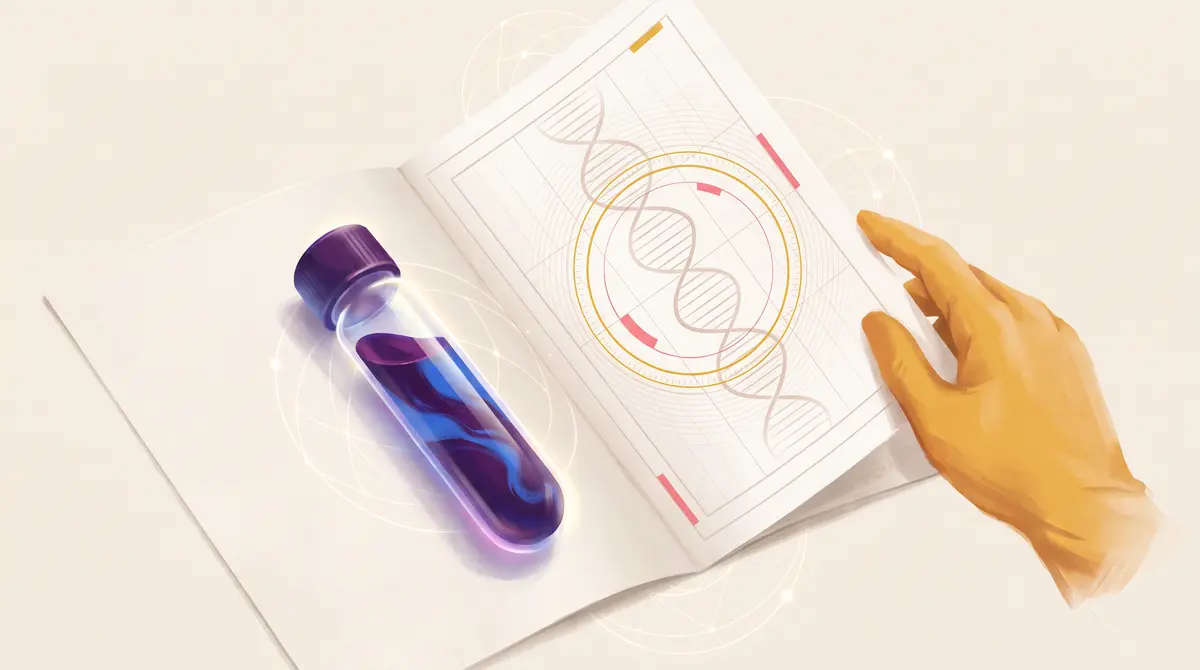
Somewhere in America this morning, a cardiologist handed a patient a prescription that may not work as expected in that patient’s body.
The bloodwork was normal. The chart was complete. Nobody was careless. The drug is one of the most prescribed on earth, but genetic variation can change how some people activate it. The test that can add that context may cost less than the copay.
The blood did not lie, exactly. It just answered a question nobody thought to ask.
I have spent twenty five years in the trust layer between buyers and sellers. Not as an advisor. As the person hired to find where a relationship quietly starts charging the customer for its own bad design. That lens traveled with me into a Quest Diagnostics waiting room on a Tuesday morning.
The system already knew my name, physician, lab order, and insurance. It asked me to type it all in again. A second lab order had disappeared. A manager was supposedly coming. Then Giselle, a phlebotomist who clearly cared, found the missing order and solved the problem.
That is the whole problem in miniature. The human in front of me was excellent. The system around her had made excellent care feel accidental.
It is why I am building a health, wellness, and longevity company: not to add another dashboard, but to make the evidence, context, and human follow-through around a result more useful to the person living with it. The discoveries in this essay changed how I look at my own health and helped me a whole ton. I am sharing them because I wish someone had put this kind of map in my hands sooner.
Quest is not a small operation with an excuse to hide behind. The company reported $11.04 billion in 2025 revenue. The question is not whether it can process a blood sample. The question is whether a person leaves that process with a usable understanding of their own body.
Blood Is a Signal. DNA Is Context.
Blood work is valuable. It can show what is happening now. DNA can add useful context to the way some biomarkers, nutrients, and medications are interpreted, especially when a qualified clinician brings the pieces together. The FDA maintains a public table of pharmacogenetic associations precisely because genetics can matter to drug response.FDA: Table of Pharmacogenetic Associations
None of this turns a genome into a fortune cookie. A genetic result is not a diagnosis. A blood result is not a life plan. The point is more ordinary and more useful: two people can arrive with similar numbers and need different questions asked next. That realization gave me a much better way to think about my own data.
The Drug That Does Not Work
Back to the cardiologist.
The drug is clopidogrel, sold as Plavix, given to reduce platelet aggregation after certain cardiovascular events and procedures. For clopidogrel, CYP2C19 intermediate or poor metabolizers may have lower levels of the active metabolite, reduced antiplatelet response, and higher cardiovascular risk. The FDA lists consideration of another P2Y12 inhibitor for these patients. This is a clinician decision, not an instruction to change medication based on a consumer report. FDA: Table of Pharmacogenetic Associations
Genetic information is one factor in treatment decisions, not a substitute for the patient’s history, current condition, other medications, or clinician judgment.
Nothing in a standard blood panel reveals this. A patient’s cholesterol may be managed, their platelets may look fine, and their follow up may be unremarkable. Blood is literal. It answers precisely the question you asked and says nothing whatsoever about the question you did not know to ask.
Your Supplement Stack Is a Hypothesis, Not a Subscription
DNA can sometimes identify context worth discussing, but it does not prescribe a supplement, determine a dose, or replace laboratory testing. The responsible sequence is simple: establish the marker, understand the context, decide with a qualified clinician, and retest when appropriate.
Build a recurring supplement stack without asking how you absorb, convert, transport, and respond to nutrients and you are guessing with a credit card on file. The guess may help. It may also become an expensive monthly ritual that never moves the marker you hoped to change. I learned to treat every bottle as a hypothesis to test, not another promise to believe.
Blood markers tell you what is happening. DNA can identify biological context worth discussing, including known differences in nutrient metabolism and response. Reviews of genotype guided supplementation describe evidence that genetic variation can modify responses to nutrients including omega 3 fatty acids, folate, vitamin D, iron, and calcium, while also making clear that this field is still developing.Genotype guided supplementation review Personalized nutrition review
This is not a claim that everyone needs a DNA test before taking a basic supplement, or that a consumer genetics report should dictate a dose. The CDC is explicit that common MTHFR variants do not currently justify changing folic acid intake on genotype alone.CDC: Folic Acid Facts for Clinicians DNA is context, not a command.
What a Chip Test Actually Reads

One number, and then we move on.
A consumer chip test genotypes selected positions. It does not read the genome as a whole.
The palest ink is better than the best memory. Traditionally Chinese, never sourced to a name, so take it as folk. It is also the whole argument for a raw file over a report. A report is what somebody remembered to tell you in the year you bought it. The file is the ink.
Rare variants may be poorly captured. HLA typing may be mostly missed. Methylation pathways may be incomplete. And the CYP450 family, the enzymes governing how you metabolize both prescriptions and supplements, can be covered unevenly.
What Whole-Genome Sequencing Adds
30x whole-genome sequencing reads broadly across the genome and can provide substantially more information than a consumer genotyping chip. It still does not capture or interpret every possible variant perfectly.
A high-quality raw file may be reanalyzed as methods and interpretation improve, provided the file remains usable and the service supports that reanalysis. A report is a current interpretation. The underlying file gives you something to revisit when the science changes.
If you already own a 23andMe or Ancestry file, start by understanding what it can and cannot tell you before spending another dollar. The point is not to collect the most data. The point is to know what question the data can answer, and what it cannot.
The Real Product Is the Relationship
In 2001 I wrote the first service level agreement for colocation. Before that, if a data center went dark, you got an apology. I helped build the instrument that converted an apology into a number, a penalty, and a named owner. Since then I have negotiated something on the order of ten billion dollars in technology contracts, and I have never once closed one without an SLA. No serious buyer would.
Diagnostics rarely gives a patient that same relationship. The collection and processing infrastructure can be competent while the ordering flow, language, billing, follow through, and human help remain fragmented. That is not cosmetic. It determines whether people return, follow through, and trust the result enough to act on it.
Function bought Getlabs in April 2026. Not because a blood draw became fashionable. Because the experience around the blood draw became the strategic asset.
The Split-Draw Experiment
Then I went to UCLA at 7:30 in the morning.
I was a difficult patient that morning and I knew it walking in. A paper order from an outside doctor, untransmittable. A long, strange panel. A second specimen collection in another building. And I arrived exactly as the waiting room filled.
Every person introduced themselves by name, front desk through the draw. The front desk hand-entered the whole order. Thirty minutes, full room behind me, and nobody once made me feel like the problem I obviously was. Then my phlebotomist walked me through the draw, why my vial count ran high, what each tube was for, the order they go in and why that order is not arbitrary.
I am running the experiment across three labs: UCLA, Quest, and LabCorp. Same blood. Same morning. Similar panel. Methodology, reference ranges, granularity, turnaround. Results are not back. When they are, I publish them either way.
Comparing the same panel across laboratories can reveal how instruments, methods, reference ranges, and reporting practices affect interpretation. If you choose to compare results, discuss it with your ordering clinician, keep the conditions as similar as possible, and do not change treatment based only on an internet comparison.
A lab result is a measurement produced by a specific method, instrument, calibration standard, and reference range. It is meaningful, but it is not context-free.
The evidence for this is not folklore. Researchers at the Icahn School of Medicine at Mount Sinai ran a cohort study of 60 healthy adults across 22 common tests, comparing Theranos with Quest and LabCorp. 15 of the 22 measurements showed significant variability between services, and the lipid panels came back nonequivalent. The authors concluded that the disparities they found could alter clinical interpretation and change how care gets used. Kidd et al., Journal of Clinical Investigation, 2016
The Tools I Actually Use
The practical tools that became useful to me live in The Stack. I separated them from this essay because this is not a shopping list. It is the reasoning that made the tools matter to me in the first place. Take only what helps you ask a better question.
A Realistic Timeline
This is not a weekend optimization project. Give yourself a few months to do it cleanly. In the first two weeks, decide what you are trying to understand and order only the tests that can help answer that question. Over the next several weeks, let the results arrive, keep the original reports, and download the raw files you are entitled to keep. By months one through three, organize the results in one place, note the dates, collection conditions, reference ranges, medications, supplements, and unanswered questions.
You can do a surprising amount yourself: read the source reports, compare what changed, and use a tool such as Claude to organize questions and summarize your own records after deciding what you are comfortable sharing. But an AI tool is not a clinician, and a portal is not ownership. Choose the browser, folder, naming system, and privacy settings you control. Keep copies of your own files. The long-term aim is a consented Health Wallet where you can organize and share your data on your terms, not hand it over to another black box.
Then find a strong practitioner for the decisions that carry real consequences: new or severe symptoms, medications, diagnoses, meaningful changes to treatment, or anything that makes you uneasy. I will publish the practitioners I would trust with that kind of work when I have done enough homework to stand behind the list. Until then, the useful end state is simpler: a clean record, a better question, and a qualified person who can see the whole picture.
I am also building toward a clearer way to evaluate alternative interventions. I will report on the options I find and publish a tool that grades the evidence, risks, contraindications, cost, reversibility, data quality, and quality of oversight. It will not choose for you. It will make it harder for anyone to sell you certainty they have not earned.
Take Me To School
If anything here does not square with reality, your experience, or a source I missed, write to tony@impactsoul.is. Take me to school. I may know a lot about systems, but I am still learning. Show me the better evidence and I will correct the work.
The Choice
We built dashboards that count a heroic number of biomarkers, then left people in waiting rooms where the computer had forgotten their name.
That is not precision medicine. That is precision theater.
And the stakes are not personal. We are about to hand this system to machines. Every model being trained right now to read labs is learning from data produced by a system with uneven methods, reference ranges, and accountability. Automate a process without improving its context, follow through, and ownership, and you get the same failure faster.
Start with the data you already have.
This is my gift to you: the discoveries that changed the quality of questions I could ask about my own body, and helped me a whole ton. I cannot promise what they will do for anyone else. I hope they help you feel less alone in the data, more prepared for the clinical conversations that matter, and more able to find your own informed path toward healing.
Keep what helps. Question what does not. Bring meaningful results to a qualified clinician who knows your history. The point is to become harder to lose inside your own data.
Sources and disclosures
The criticism above rests on public sources, not rumor. These links are here so a reader can inspect the record, disagree intelligently, and tell me where I got something wrong.
| Topic | Primary reader path |
|---|---|
| Quest 2025 financial results | Quest Diagnostics investor relations |
| Patient review record | Trustpilot, ConsumerAffairs, and BBB |
| 2019 AMCA data incident | Quest's incident notice |
| Billing and collections lawsuit allegation | ClassAction.org report |
| 2024 California settlement, hazardous waste and patient information disposal | California Attorney General announcement |
| Function acquisition of Getlabs | Acquisition announcement |
| Genetics and drug response | FDA pharmacogenetic associations and CPIC |
| Lab to lab variability, peer reviewed | Kidd et al., J Clin Invest 2016, DOI 10.1172/JCI86318 |
| DNA context and supplement decisions | Genotype guided supplementation review, personalized nutrition review, and CDC guidance on MTHFR and folic acid |
| What Quest could fix | Read the ten-point operating memo |
I have commercial relationships with several diagnostics companies. Current provider and relationship disclosures are listed on The Stack. No company named in this article paid for or reviewed it. Informational only. Not medical advice. Genetic results are not diagnoses. Review results and treatment decisions with a qualified clinician.